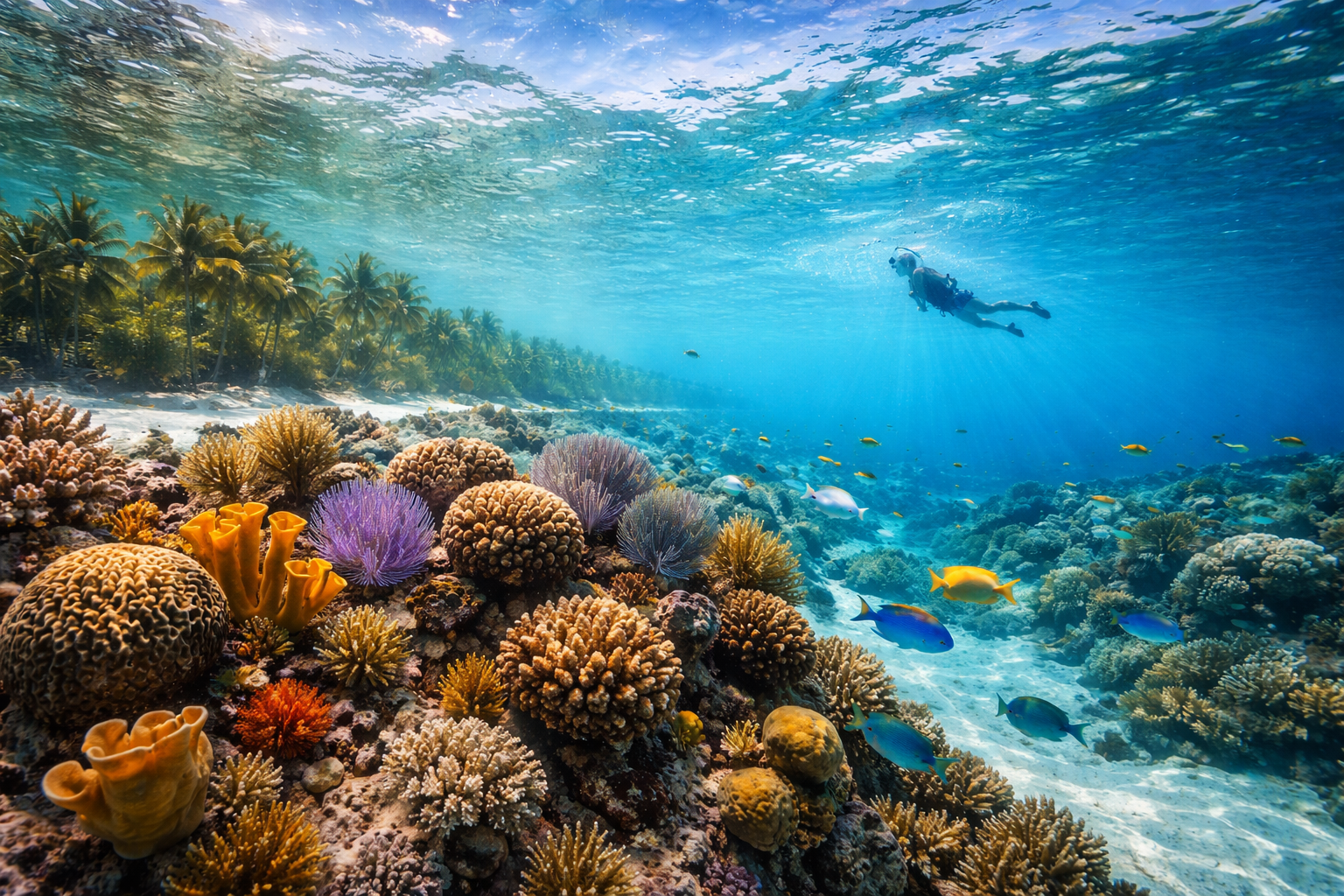


One of the best things about snorkeling in St. Croix, St. John, and St. Thomas is how effortless it can be. You can park your car, walk into the water, and within minutes you’re floating above coral, sea fans, and tropical fish.
But that accessibility also means fragile ecosystems are constantly exposed to pressure. The reefs here are living organisms. And they’re more delicate than most people realize. If you’re visiting, here’s how to snorkel in a way that protects the island — and keeps you safe.
1. Never Stand on Coral (Even “Dead” Coral)
Coral may look like rock, but it’s alive. Standing on it:
- Kills fragile coral polyps
- Breaks decades of growth in seconds
- Damages habitat for fish and marine life
Even coral that appears bleached or dead may still be part of a living reef structure.
If you need to adjust your mask or fins, float on your back or move to a sandy patch — never the reef.
2. Keep a Respectful Distance from Wildlife
Sea turtles, rays, octopus, reef sharks, and colorful fish are common sights here. What not to do:
- Don’t chase turtles
- Don’t corner rays
- Don’t try to touch fish
- Don’t block a turtle’s path to the surface
Turtles especially need to surface to breathe. Crowding them causes stress and can disrupt feeding patterns.
The best encounters happen when you simply float and let marine life move naturally around you.
3. Use Reef-Safe Sunscreen (or Better Yet, Wear a Rash Guard)
Certain sunscreen ingredients — especially oxybenzone and octinoxate — harm coral reefs. Better options:
- Mineral-based sunscreen (zinc oxide or titanium dioxide)
- Long-sleeve rash guards
- Swim leggings for extended sessions
Less chemical runoff means healthier reefs.
4. Mind Your Fins
Many beginners unintentionally kick coral while swimming. Tips:
- Keep your fins near the surface
- Use slow, controlled kicks
- Avoid vertical swimming in shallow reef zones
A single careless kick can break coral that took decades to grow.
5. Don’t Collect Shells or “Souvenirs”
It’s tempting to take:
- Shells
- Sea glass
- Pieces of coral
But these are part of the ecosystem. Hermit crabs need shells. Sand forms from broken coral and shells. Even small removals add up over time.
Take photos. Leave everything else.
6. Know the Conditions Before You Enter
Snorkeling safely is part of snorkeling responsibly. Check:
- Wind direction
- Current strength
- Swell conditions
- Visibility
If the water looks rough or murky, skip it. Conditions can change quickly in the Caribbean.
And always snorkel with a buddy.
7. Avoid Feeding Fish
Feeding fish:
- Alters natural behavior
- Disrupts reef balance
- Attracts unwanted species
Marine life should rely on the reef — not humans — for survival.
8. Give Space at Popular Spots
Places like Dorsch Beach, Cane Bay, Frederiksted Pier, and Trunk Bay can get busy.
If someone is already observing wildlife, give them space. The reef isn’t a theme park — it’s a shared, living environment.
Why This Matters
The USVI’s reefs have already faced:
- Hurricanes
- Coral bleaching
- Disease
- Rising ocean temperatures
They don’t need additional stress from careless human behavior.
Most damage isn’t malicious — it’s simply uninformed. And a little awareness goes a long way.
Final Thought
Snorkeling in the USVI is a privilege. It’s one of the few places where you can step into the water and instantly enter another world.
The goal isn’t just to see it.
It’s to leave it exactly as you found it — so the next person can experience that same wonder.