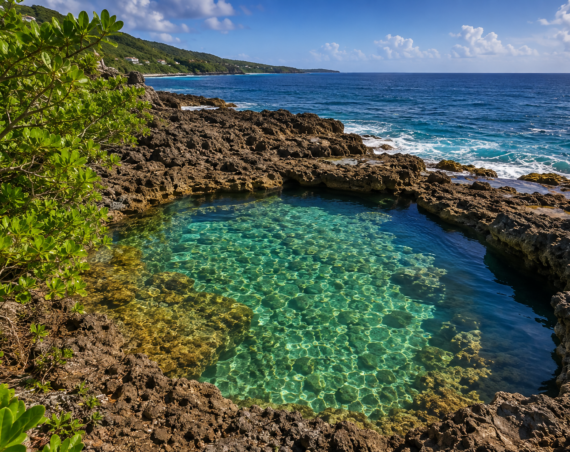


Sometimes you need an island escape, even when you cannot immediately book a flight to the Caribbean.
A good movie can transport you to a place surrounded by turquoise water, tropical vegetation, empty beaches, and the endless sound of the ocean. Of course, many island movies focus less on relaxing beneath a palm tree and more on shipwrecks, survival, unexpected dangers, and finding creative ways to live far from civilization.
That is part of their appeal.
The islands in these movies are beautiful, but they are also mysterious and unpredictable. They offer freedom and adventure while testing the people who find themselves there.
Whether you are dreaming about your next trip to the U.S. Virgin Islands, missing the Caribbean, or simply love stories set near the sea, these five movies can help put you in an island state of mind.
1. Swiss Family Robinson (1960)
Few movies capture the childhood fantasy of building a completely new life on a tropical island as well as Disney’s Swiss Family Robinson.
After becoming shipwrecked, the Robinson family must learn to survive together on a remote island. Instead of simply waiting to be rescued, they transform their surroundings into a home. They build an elaborate treehouse, find food, explore the island, care for animals, and face dangers ranging from wildlife to pirates.
The treehouse is one of the most memorable parts of the movie. It represents what makes island adventures so appealing: the idea of leaving ordinary life behind and creating something entirely different.
The movie is imaginative, colorful, and filled with the kind of scenery that makes you want to explore every trail, beach, and hidden corner of an island.
It is worth remembering that the film reflects the attitudes and conventions of its era, and some scenes and portrayals have not aged particularly well. Even so, its sense of tropical adventure has made it an enduring family classic.
Why it puts you in an island state of mind: It makes island life feel like one enormous outdoor adventure, where creativity and teamwork can turn an unfamiliar place into a home.
Perfect for: Families, classic Disney fans, and anyone who has ever dreamed of living in a treehouse near the sea.
2. Island of the Blue Dolphins (1964)
Based on Scott O’Dell’s novel, Island of the Blue Dolphins follows Karana, a young Indigenous girl who is left alone on an island off the coast of California.
Separated from her people, Karana must find food, build shelter, protect herself, and learn how to survive in isolation. Over time, she develops a deeper relationship with the island and its animals, including a wild dog that becomes her companion. The 1964 film adaptation stars Celia Kaye as Karana.
This is a quieter island story than many of the others on this list. Its appeal does not come from pirates, elaborate inventions, or dramatic action. It comes from watching Karana become resourceful, patient, and comfortable in a place that initially seems lonely and dangerous.
The movie also reminds us that an island can be more than a setting. It can become a source of identity, strength, and belonging.
Why it puts you in an island state of mind: It captures the solitude of an island and the close connection a person can develop with the land, sea, and wildlife.
Perfect for: Viewers who enjoy thoughtful survival stories and movies centered on resilience and nature.
3. Kon-Tiki (2012)
Kon-Tiki is different from the other movies on this list because its characters are not stranded accidentally. They deliberately set out across the Pacific Ocean on a handmade wooden raft.
The movie dramatizes Norwegian explorer Thor Heyerdahl’s 1947 expedition. Heyerdahl and five companions sailed from Peru on a balsa-wood raft to test his theory that people from South America could have reached Polynesia using ancient methods.
The result is a beautifully filmed ocean adventure filled with isolation, uncertainty, storms, marine life, and the overwhelming scale of the Pacific.
Although much of the film takes place at sea rather than on an island, it captures the spirit of island exploration perfectly. The crew is moving toward a distant tropical destination using little more than wind, currents, determination, and trust in one another.
It is also a reminder of how deeply the ocean connects island cultures. Islands may appear isolated on a map, but the sea has served as a route for migration, trade, exploration, and cultural exchange for centuries.
Why it puts you in an island state of mind: It celebrates the ocean as a pathway to discovery and captures the excitement of approaching a distant tropical shore.
Perfect for: Viewers who enjoy true stories, maritime history, exploration, and sweeping ocean scenery.
4. Robinson Crusoe (1997)
The story of Robinson Crusoe has influenced island adventures for centuries, and the 1997 adaptation stars Pierce Brosnan as the famous castaway.
After surviving a shipwreck, Crusoe finds himself alone on a remote island. He must secure food, create shelter, confront loneliness, and adjust to a life completely separated from the society he once knew. His experience changes when he meets Friday, played by William Takaku, and the two gradually form a complicated friendship while facing additional dangers.
This version is more serious than Swiss Family Robinson. The island is beautiful, but survival is difficult. Isolation gives Crusoe time to reconsider his assumptions, his past, and the way he views people who come from a different culture.
As with other adaptations of older literature, viewers may notice themes and portrayals rooted in the colonial period in which the original story was written. The movie attempts to examine some of those ideas through the relationship between Crusoe and Friday.
Why it puts you in an island state of mind: It combines dramatic coastal scenery with the timeless fantasy—and harsh reality—of being completely alone on an island.
Perfect for: Fans of classic literature, historical adventures, and more serious survival stories.
5. Cast Away (2000)
Of all the films on this list, Cast Away may offer the most realistic sense of what prolonged isolation on an uninhabited island could feel like.
Tom Hanks plays Chuck Noland, a FedEx employee who survives a plane crash and washes ashore on a remote island in the Pacific. With almost nothing to help him, Chuck must learn how to find water, make fire, open coconuts, catch food, create shelter, and endure years without human companionship.
What begins as a survival story gradually becomes something more reflective. The island forces Chuck to slow down and focus entirely on the essentials of life.
Time, schedules, work deadlines, and possessions lose their importance. Water, food, shelter, hope, and companionship become everything.
The movie does not romanticize being stranded. Island life is physically and emotionally brutal for Chuck. Yet the setting is undeniably powerful. The empty beaches, dramatic rock formations, clear water, and complete separation from the modern world create some of the most memorable island imagery in modern film.
Why it puts you in an island state of mind: It captures both sides of island isolation—the extraordinary natural beauty and the reality of being far removed from everything familiar.
Perfect for: Viewers who appreciate emotional dramas, realistic survival stories, and movies that stay with you long after the credits end.
What These Island Movies Have in Common
None of these movies presents island life as an ordinary beach vacation.
There are no resort check-ins, poolside cocktails, restaurant reservations, or carefully planned snorkeling excursions. Instead, the characters must adapt to places where nature sets the schedule.
They learn to work with what is available. They become inventive. They slow down. They notice the weather, the tides, the animals, and the movement of the sea.
That may be one reason island stories continue to fascinate us.
Most of us do not actually want to be stranded without electricity, air conditioning, groceries, or a comfortable bed. But there is something appealing about temporarily imagining a life stripped of distractions and routines.
These movies invite us to consider what we truly need—and how we might respond if the familiar world suddenly disappeared.
Island Adventure Versus Real Island Life
Living in or visiting the U.S. Virgin Islands is very different from being stranded on a deserted island.
The USVI has lively communities, restaurants, stores, historic towns, hotels, roads, schools, businesses, and modern homes. Island residents are not living in treehouses or building rafts to escape.
Still, some of the feelings captured in these movies may seem familiar.
Island life can inspire greater awareness of nature. You pay attention to the weather. You notice the condition of the sea. You become familiar with the changing light, the trade winds, and the rhythm of the seasons.
You may also find yourself thinking differently about time, convenience, possessions, and what you genuinely need.
Thankfully, you can experience those lessons without surviving a shipwreck or talking to a volleyball.
Plan Your Own Island Escape
Movies can briefly transport us somewhere else, but nothing compares with experiencing an island for yourself.
In the U.S. Virgin Islands, you can hike through tropical landscapes, explore historic ruins, snorkel above coral reefs, watch sea turtles swim, discover quiet beaches, and look out across the Caribbean from a scenic overlook.
You can have the beauty and adventure without the shipwreck.
Until your next visit, these five films offer a memorable escape filled with tropical scenery, ocean journeys, survival, discovery, and the enduring fascination of life surrounded by the sea.
So choose a movie, settle in, and let yourself drift into an island state of mind.